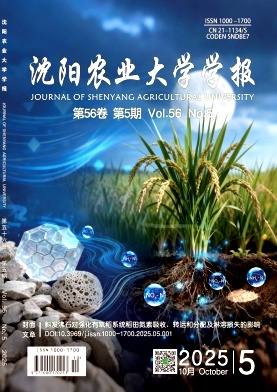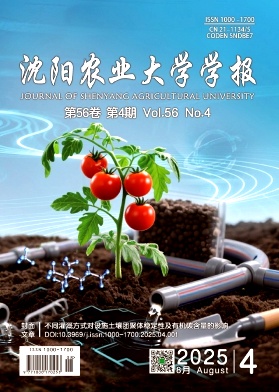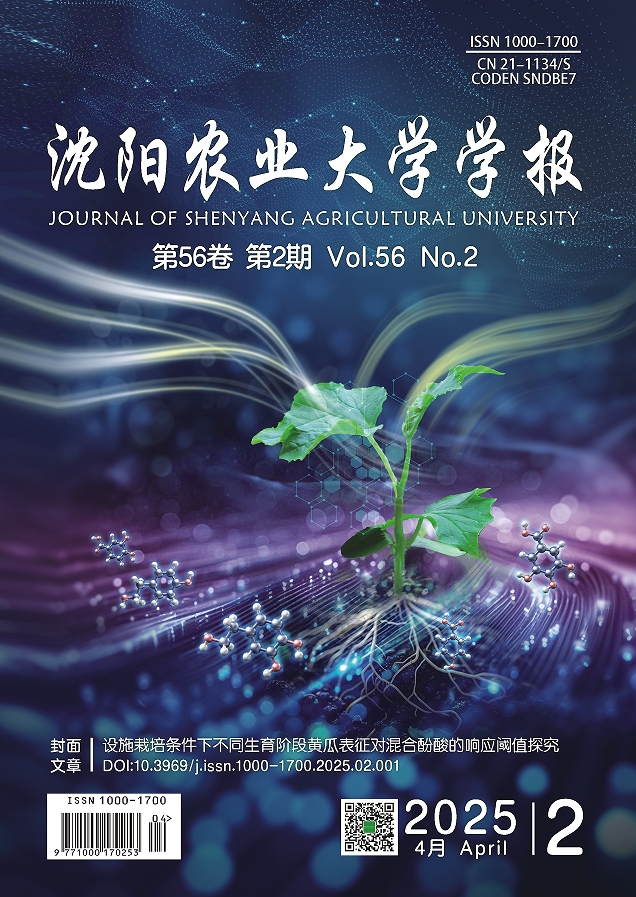
Tracking the information about your manuscript
Communicate with the editorial office
Query manuscript payment status Editors LoginCollecting, editing, reviewing and other affairs offices
Managing manuscripts
Managing author information and external review Expert Information Reviewers LoginOnline Review
Online Communication with the Editorial Department
Downloads
Page Views
Page visits today: 42

Introduction
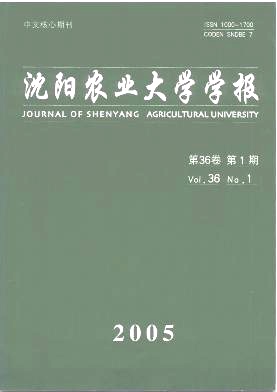
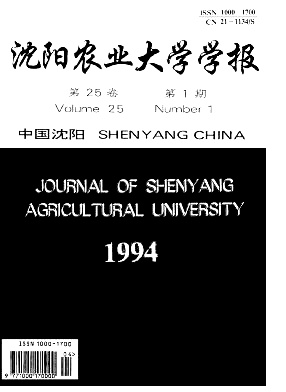
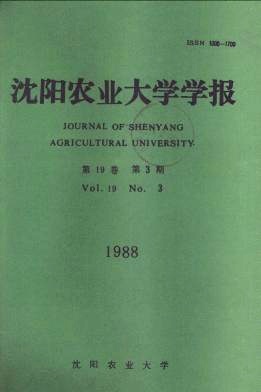
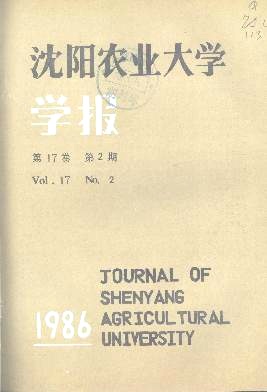
Journal title: Journal of Shenyang Agricultural University
Established: June 1956
Governed by: The Education Department of Liaoning Province
Sponsored by: Shenyang Agricultural University
Publication Frequency:Bimonthly
Tel: 86-24-88487083
Email: syndxb@126.com
CN: 21-1134/S
ISSN: 1000-1700
Online First
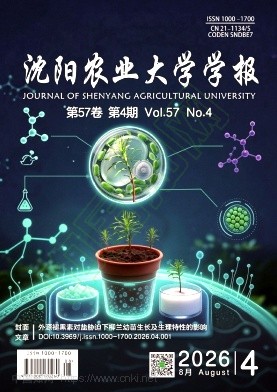
Effects of Exogenous Melatonin on Growth and Physiological Characteristics of Chamerion angustifolium Seedlings under Salt Stress
BAO Qiuli;LIU Yue;[Objective]Soil salinization is one of the major abiotic stress factors limiting the growth and development of landscape plants worldwide. Melatonin(MT), an indoleamine regulator widely presents in living organisms, has shown considerable potential for alleviating damage caused by drought, salinity, and extreme temperatures by enhancing intracellular antioxidant defense, scavenging excess reactive oxygen species, and maintaining ionic homeostasis. This study aimed to investigate the regulatory mechanisms of exogenous MT on the growth, development, and physiological homeostasis of Chamerion angustifolium seedlings under salt stress.[Methods]Wild Chamerion angustifolium seedlings from Xilingol(provenance A) and Hulunbuir(provenance B) were used in a pot experiment. Two NaCl concentrations(0 and 150 mmol·L-1) and three foliar MT concentrations(0, 100, and 200 μmol·L-1) were applied to evaluate the effects of MT on seedling phenotypic and physiological traits. [Results]Exposure to 150 mmol·L-1NaCl significantly inhibited the growth and photosynthetic carbon fixation efficiency of Chamerion angustifolium seedlings. Foliar application of 200 μmol·L-1MT significantly alleviated salt-induced damage, and growth inhibition was mitigated in seedlings of both provenances. Exogenous MT enhanced enzymatic antioxidant defense in seedlings of both provenances by increasing the activities of superoxide dismutase(SOD), peroxidase(POD), catalase(CAT), glutathione reductase(GR), ascorbate peroxidase(APX), and glutathione peroxidase(GPX), while reducing the accumulation of malondialdehyde(MDA) and total reactive oxygen species(T-ROS),thereby mitigating salt-induced oxidative damage. In addition, MT increased the activities of ribulose-1,5-bisphosphate carboxylase/oxygenase(Rubisco) and Rubisco activase(RCA), thereby promoting the recovery of photosynthetic carbon metabolism in Chamerion angustifolium seedlings under salt stress. [Conclusion]Exogenous MT significantly improved the salt tolerance of Chamerion angustifolium seedlings by alleviating salt-induced growth inhibition, improving photosynthetic carbon metabolism, and strengthening antioxidant defense capacity.
Functional Analysis of OsAlR2 in Regulating Aluminum Tolerance in Rice
JIANG Sixü;XIE Hongyang;FENG Jing;FU Yao;ZHANG Zhe;ZHANG Qi;ZHANG Wenzhong;ZHAO Minghui;[Objective]Study was carried out to investigate the function of the aluminum tolerance-related gene OsAlR2 under aluminum stress, and to elucidate the regulatory mechanism by which OsAlR2 participates in regulating aluminum stress responses.[Methods]In our previous study, an aluminum tolerance-related gene OsAlR2 was identified. The knockout mutant ko-alr2 and overexpression mutant oe-alr2 were generated, and the phenotypes and physiological mechanisms of these lines were analyzed.[Results]After aluminum treatment, the root length and root activity of oe-alr2 were lower than those of the wild type, whereas no significant differences were observed between ko-alr2 and the wild type. In terms of aluminum content, the Al3+ content in ko-alr2 was significantly lower than that in the wild type, while no obvious difference was found in oe-alr2 compared with the wild type.Subsequent section observation showed that root cells of oe-alr2 exhibited varying degrees of damage after aluminum treatment,whereas no obvious damage was detected in the wild type and ko-alr2. Under aluminum stress, the MDA content in oe-alr2 was significantly higher than that in the wild type, while the MDA content in ko-alr2 was markedly lower. Assays of the reactive oxygen species-scavenging enzymes CAT and SOD revealed that the activities of CAT and SOD in ko-alr2 were significantly higher than those in the wild type, whereas the activities in oe-alr2 were lower. The expression levels of several known aluminum tolerance genes,including OsFRDL2, OsSTAR1, and OsCDT3, were determined. Under aluminum stress, the transcript levels of OsSTAR1 and OsCDT3 in ko-alr2 were significantly upregulated and higher than those in the wild type, while the opposite pattern was observed in oe-alr2.[Conclusion]These results demonstrate that the OsAlR2 gene is involved in regulating the defense of rice against aluminum toxicity. It negatively regulates aluminum tolerance in rice by modulating reactive oxygen species-scavenging capacity and the expression of aluminum tolerance-related genes. This study lays a foundation for further revealing the regulatory mechanism of this gene in response to aluminum stress at the rice seedling stage.
Exploring Selective Domestication and Germplasm Evolutionary Patterns of Candidate Genes Related to Maize Grain Moisture Content
YANG Wenyan;CHEN Fengjia;QU Jianzhou;LIU Meiting;WANG Xinyu;DU Wanli;ZHANG Hongwei;[Objective]Identifying key genes regulating maize seed moisture content and clarifying their evolutionary patterns in breeding materials from different eras is of great significance for the breeding of maize varieties suitable for mechanized harvesting.[Methods]In this study, 297 candidate genes associated with grain moisture content in maize were collected. The GO enrichment analysis was performed to elucidate the biological processes in which these genes are involved. Evolutionary analysis of the promoter regions of candidate genes was conducted using maize wild relatives, landraces, and American inbred lines to assess their selection signatures during domestication. Meanwhile, the allele frequency dynamics of candidate genes during genetic improvement were analyzed using Chinese maize germplasm from different breeding eras. Key genes subjected to both domestication selection and genetic improvement selection were identified through intersection analysis. Subsequently, the differences in grain moisture content among different genotypes of the key genes were analyzed, along with the frequency changes of target alleles during the breeding process.[Results]The GO enrichment analysis revealed that the 297 candidate genes were significantly enriched in biological processes such as cell wall organization and oxidation-reduction reactions, suggesting that these processes may be involved in regulating seed moisture-related traits. The evolutionary analysis indicated that the promoter regions of candidate genes were under selection during domestication, and some genes were also selected during the genetic improvement process of Chinese maize germplasm across different breeding eras. Through intersection analysis, seven key genes subjected to both domestication selection and genetic improvement selection were identified. Among them, three genes showed significant differences in grain moisture content among different genotypes; in addition, the allele frequency associated with higher grain moisture content of other two genes exhibited a continuous decreasing trend during genetic improvement.[Conclusion]This study provides theoretical support for elucidating the germplasm evolution pattern of grain moisture content in maize and offers important candidate gene resources for breeding machineharvestable maize varieties.
Adaptability and High-yield Characteristics of 13 Soybean Varieties from Heilongjiang in the Northern Xinjiang Region
GUO Song;LI Ju;WANG Yanjie;LI Jian;WANG Jialin;WANG Cong;[Objective]Study was carried out to screen out high-yielding double-cropping soybean varieties suitable for cultivation in Northern Xinjiang and clarify their high-yield growth characteristics.[Methods]This experiment was conducted in 2023 and 2024,using 13 double-cropping soybean varieties as test materials. The differences in growth period, agronomic traits, flower and pod parameters, and yield among different varieties were compared in the field.[Results]The results showed that the growth period of the tested varieties ranged from 87 to 102 days, all of which could mature normally. There were significant differences in yield among different varieties(lines) in different years, with yields ranging from 2 235.6 to 3 226.02 kg·hm-2. The yields of HN151 and JD30 were the highest in both years. In 2023 and 2024, the plant heights of soybeans were 42.6 to 86.58 cm and 53.0 to 72.8 cm,respectively; the bottom pod heights were 6.37 to 17.2 cm and 7.56 to 14.0 cm, respectively; the stem diameters were 3.21 to 5.54 mm and 2.28 to 4.96 mm, respectively; the effective pod numbers per plant were 9.82 to 27.2 and 9.6 to 22.4, respectively; the seed numbers per plant were 25.4 to 86.0 and 21.4 to 52.4, respectively; and the 100-seed weights were 16.2 to 20.96 g and 15.62 to 20.82 g, respectively.[Conclusion]Comprehensive analysis indicated that HN151 is suitable for large-scale cultivation in Northern Xinjiang, with a yield over 3 000 kg·hm-2. A higher number of flowers, pods, and seeds per unit area is the key to achieving high yields of soybeans in Northern Xinjiang.
Effects of Different Lily Cultivars on the Development and Reproduction of Cotton Aphid, Aphis gossypii Glover
ZHOU Lihong;WANG Erli;WANG Xingya;SHI Huiping;WANG Weidong;YANG Yingdong;[Objective]Study was carried out to clarify the adaptability of Aphis gossypii Glover on different lily varieties, and to achieve an eco-friendly and efficient biological control strategy by leveraging the intrinsic aphid resistance of lilies to manage aphid damage. [Method]Under laboratory conditions, the development and reproduction of cotton aphid on five lily varieties(Fangio, ConcaD'or,Sorbonne, Tarisa, and Viviana) were observed using biological methods, and experimental population life table was constructed.[Results]Different lily varieties significantly affected the development and reproduction of A. gossypii. The survival rate of cotton aphid was lowest on Tarisa. On Fangio, the adult longevity(5.32 d) and total lifespan(9.56 d) were the shortest, and fecundity(23.59 offspring) was the weakest, all significantly lower than those on other varieties. On Viviana, the adult longevity(11.75 d) and total lifespan(16.01 d) were the longest, and fecundity(50.24 offspring) was the highest, significantly exceeding those on other varieties.Population life table parameters showed that the intrinsic rate of increase(r=0.312), finite rate of increase(λ =1.366), and net reproductive rate(R0=36.84) of A. gossypii on Viviana were significantly higher than those on other varieties, while the parameter values on Fangio and Tarisa were the lowest. [Conclusion]Based on various indicators, Viviana is a suitable host variety for the population growth of A. gossypii, whereas Fangio and Tarisa are unsuitable. The research results provide a theoretical basis for the forecasting and management of A. gossypii and the breeding of aphid-resistant lily varieties in lily production.